Certifications
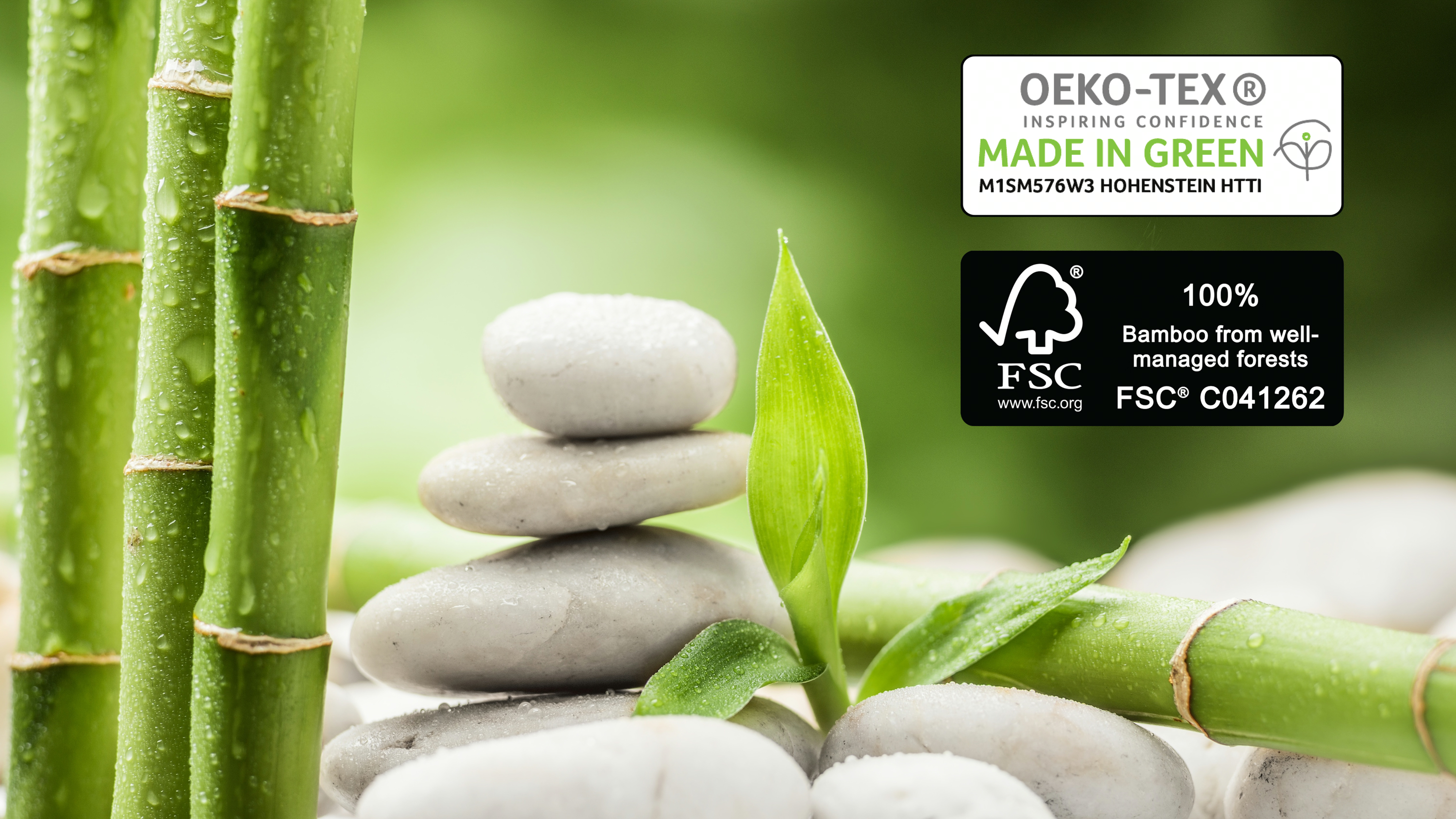
At Mosobam, certifications are part of the product itself, not just something printed on a hangtag. They matter because towels are high-contact textiles: they touch your face, body, and skin every day, often when skin is damp, freshly washed, dry, or more reactive than usual. That is why we care deeply about two things at the same time: exceptional softness and serious standards behind the materials and manufacturing. Our towels carry MADE IN GREEN by OEKO-TEX® with label ID M1SM576W3 HOHENSTEIN and FSC® certification under FSC C041262.
MADE IN GREEN by OEKO-TEX®:
This certification matters because it brings together three things that should go together in a premium towel: harmful-substance testing, audited production conditions, and supply-chain traceability. In practical terms, it means the product is tied to materials that have been tested for harmful substances, made in environmentally minded facilities, and produced in safe, socially responsible workplaces, with traceability back through the supply chain. It is also not a one-time marketing badge: the label depends on valid underlying certifications, is monitored through quality-assurance controls, and can be withdrawn if the requirements are no longer met.
For a towel, that kind of standard is especially relevant because terry products fall into the direct-skin-contact category, and the testing framework becomes stricter as skin contact becomes more intensive or skin sensitivity becomes more important. That is exactly the kind of scrutiny we want behind a product used on the face and body every day.
What does that mean in more practical terms? It means attention to the kinds of substances people reasonably worry about in dyed, finished, and processed textiles. The harmful-substance screening behind this system covers a broad range of chemicals and residues, including banned azo dyes, carcinogenic and allergy-inducing colorants, formaldehyde, pentachlorophenol, heavy metals such as cadmium, lead, and nickel, pesticides on natural fibers, polycyclic aromatic hydrocarbons (PAHs), organotin compounds, chlorinated phenols, phthalates, PFAS-related substances such as PFOS and PFOA, and surfactant residues such as APEOs, among many others. The standard also screens against atypical odors and is updated to reflect current legal and scientific developments.
That matters not just from a technical standpoint, but from a comfort standpoint. People with dry skin, sensitive skin, or eczema-prone skin often have to pay more attention to irritation triggers. Dermatology guidance consistently emphasizes that soft, breathable fabrics are preferable to rough-feeling ones for eczema-prone or dry, sensitive skin, and that fragrance and other irritants can contribute to flare-ups or skin irritation. That does not make a towel a medical product, and we do not present our towels as a treatment. But it does mean the combination of a very soft hand feel and strong harmful-substance screening is a meaningful standard for a textile that touches skin so directly.
That is one of the reasons we value our blend of Aegean Turkish Combed Cotton and Viscose Made From Bamboo so highly. The softness of the fiber blend is part of the comfort story; the certification is part of the confidence story. Together, they support a towel that is designed to feel gentle, plush, and skin-conscious without relying on vague or unverified claims.
FSC® Certified:
If MADE IN GREEN speaks to what is happening in the finished textile and manufacturing, FSC® speaks to discipline at the sourcing level. FSC certification is built around responsible stewardship and chain-of-custody control from source to finished product. That means the forest-based material is meant to be tracked through sourcing, processing, trading, and distribution, rather than being treated as an unverified raw-material story. FSC’s overall framework is built around standards that are environmentally appropriate, socially beneficial, and economically viable, with responsible sourcing controls running through the value chain.
This is especially important when bamboo-based inputs are part of the material story. Bamboo supply chains are not something we treat casually. They require real sourcing discipline, because bamboo and other forest-based materials can move through complicated upstream networks before they ever become a finished textile component. FSC certification adds an important layer of control here by bringing documented chain-of-custody requirements and stronger sourcing accountability into that upstream process.
It also matters because supply-chain integrity in bamboo has been important enough to warrant active oversight and enforcement. FSC has publicly monitored bamboo supply chains for integrity risks, investigated false claims, and taken action against companies that did not meet the standard. That is exactly why we see this certification as valuable: it is not casual, and it is not decorative. It represents a system that is meant to challenge weak sourcing claims rather than simply accept them.
More broadly, FSC reflects a higher bar for how forest-based materials should be handled. Its system is designed to support responsible sourcing, stronger traceability, and protections that consider forests, ecosystems, and people together. That includes attention to Indigenous rights and land-use rights within the broader framework of responsible forest stewardship. For Mosobam, that matters because sustainability should start upstream, not only at the finished-product stage.
Why This Matters:
A lot of products in the market talk about softness, purity, sustainability, or quality. Far fewer back those ideas with this level of third-party structure. These certifications require documentation, supplier coordination, valid underlying certificates, traceability, ongoing compliance, and renewal. They raise the standard beyond feel-good language and push it closer to something customers can actually trust.
That is the standard we want behind Mosobam. We work hard to source and manufacture to a higher level because we believe a luxury towel should do more than feel soft in the moment. It should reflect better choices in the fibers, better control in the process, stronger attention to what touches your skin, and a more responsible approach to sourcing from the start.